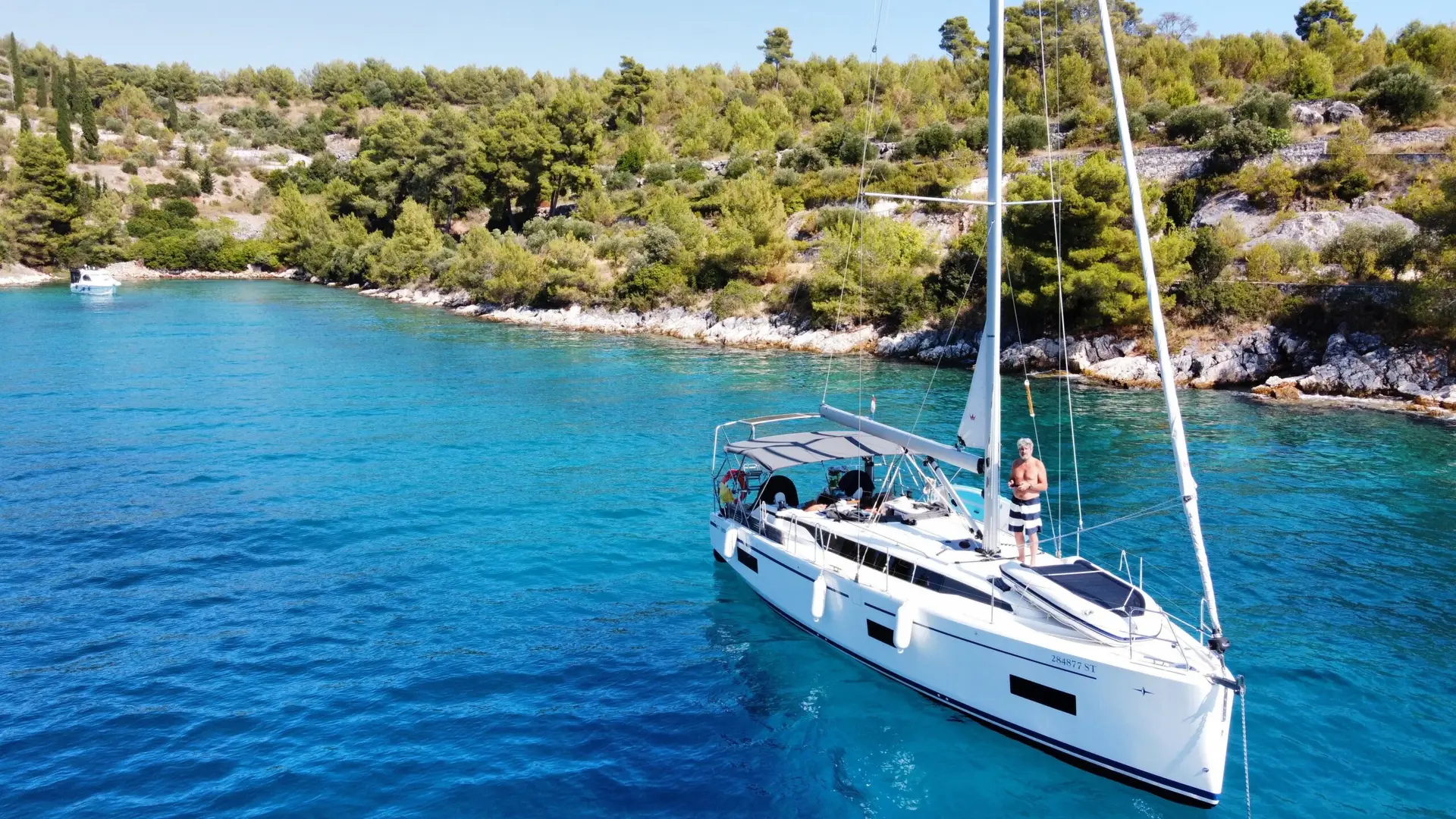
Nobody expects first-time guests to arrive already knowing yacht charter etiquette. Part of the fun of a sailing holiday is settling into a different rhythm of life on the water. If you are open, considerate, and willing to listen, you are already most of the way there. Good yacht charter etiquette is less about following rigid rules and more about respecting the boat, the skipper, and the fact that everyone is sharing a relatively small space.
Start with clear expectations before boarding
Before you step on board, ask practical questions about the charter, the boat’s equipment, and the crew’s role. A skipper is responsible for navigation, safety, weather decisions, and the yacht itself. A hostess on board may help with meals, provisioning, cleaning common areas, and keeping daily life on board running smoothly.
In our experience, the best weeks begin when guests understand who is responsible for what. If you have a skipper and hostess, agree in advance on meal preferences, dietary needs, shopping lists, restaurant plans, and whether the crew will eat separately or join the group occasionally.
It also helps to understand the difference between a skipper’s role and general service. On a skippered charter, the skipper is there to operate the yacht safely, manage navigation, make weather decisions, and support the overall flow of the trip. That does not mean acting as a waiter, cleaner, porter, or entertainer. This is one of the most useful things to understand before a skippered charter, especially if it is your first time sailing in Croatia.
Every yacht has its own house rules. These may cover smoking, pets, water toys, cabin use, marina procedures, and the return time on the final day. Reading these details before boarding avoids uncomfortable misunderstandings later.
Check-in day: a little patience goes a long way
Many first-time guests are surprised that arriving at the marina does not always mean immediate boarding. Between two charters, the yacht still needs cleaning, technical checks, linen changes, and final preparation for the next group. Arriving early does not necessarily mean the yacht can be handed over early.
This is one of the reasons check-in day can feel busy in the marina, even when everything is running normally. If your yacht is not ready the moment you arrive, it usually means the team is preparing it properly rather than rushing the handover. A little patience on the first day helps the week start more smoothly.
Respect the skipper’s safety and weather decisions
The skipper’s decisions are not a matter of personal preference. Weather, wind direction, swell, berth availability, and local conditions can change an itinerary quickly. A bay that looked perfect in the morning may become uncomfortable or unsafe by afternoon.
Think of your itinerary as a plan, not a contract.
One of the most important things to understand on a yacht charter is that the itinerary is always a plan, not a fixed promise. Weather forecasts change, sea conditions shift, berths may fill up, and a route that looked simple on paper may not be the best or safest option on the day.
In our experience, guests enjoy the week much more when they treat the itinerary as flexible. A good skipper will always try to deliver the spirit of the trip you wanted, even if the exact order of stops or overnight bays changes along the way.
Be flexible when plans change. A skipper may suggest leaving an anchorage earlier, choosing a different restaurant, or skipping a distant island because the conditions are not suitable. This is part of a professional charter, not a failure to deliver the original plan.
During manoeuvres, listen carefully and stay out of the way unless the skipper asks for help. Passing a line, placing fenders, or holding the yacht steady can be useful when directed. Walking across the deck, offering conflicting advice, or jumping ashore too early can make docking harder and less safe.
Treat the yacht like a well-kept home on the water
A yacht is comfortable, but it is not a hotel with unlimited space, water, or electricity. Keep personal belongings tidy, use your cabin thoughtfully, and avoid leaving wet swimsuits, towels, bags, or water toys across shared areas.
Many charter yachts are kept barefoot or allow only clean, soft-soled boat shoes that are used exclusively on board.
A few simple habits make a significant difference:
- Use a separate towel for swimming and showering.
- Close cabin hatches before sailing or when rain is possible.
- Keep cabin doors and lockers secure while the yacht is moving.
- Rinse sand off before coming aboard after a beach stop.
- Return paddleboards, snorkelling gear, and other water toys neatly after use.

Pack with onboard storage in mind
Storage space on a yacht is limited, especially in cabins. Soft bags are usually much easier to stow than hard suitcases, which can be awkward to fit once unpacked.
If you want to prepare well before your trip, our guide on (how to pack for a yacht charter in Croatia) covers the basics in more detail.
Be mindful of toilets, water, and electricity
Marine toilets are more sensitive than household bathrooms. Marine toilets are much more sensitive than household toilets. Never put wipes, sanitary products, cotton buds or other items into them, and always ask at check-in whether toilet paper should go into the toilet or the waste bin.
Fresh water is also limited. Short showers are part of life on board, especially when anchoring in quiet bays. Avoid running taps unnecessarily, and do not leave the shower on while washing your hair or brushing your teeth.
Electricity depends on the yacht’s battery capacity, solar panels, shore power, or generator. Charging phones and cameras is usually easy, but high-consumption appliances may not be practical. Ask before using hair dryers, styling tools, or other equipment that could drain the system.
Food, drinks, and crew meals
Food is often one of the highlights of a sailing holiday, whether you cook together, arrange provisioning, or eat in waterfront restaurants. Keep the galley organised, label special items if necessary, and clean up after preparing snacks or drinks.
If a hostess is on board, she is not simply a luxury addition. For families, groups of friends, and guests celebrating a special occasion, she can make the charter far more restful. The person who usually plans meals, shops, clears up, and looks after everyone else can enjoy the holiday too.
Guests are responsible for crew meals, drinking water, and reasonable breaks. When eating ashore, many guests invite the skipper or hostess to join them, while others prefer some private family time. Both are perfectly fine. If the crew does not join you, simply agree on an alternative arrangement so they can have a meal independently.
In most cases, the skipper and hostess will eat the same food as the guests when meals are prepared on board, so it is helpful to discuss dietary preferences early. A quick conversation at the start of the charter avoids awkwardness later and makes provisioning much easier.
Keep social life enjoyable and safe
A yacht charter should be fun, but alcohol and water require common sense. Avoid excessive drinking before swimming, using the dinghy, paddleboarding, or returning to the yacht at night. The sea, even in a calm bay, deserves attention.
Children should wear suitable life jackets when required, especially during sailing, dinghy rides, and marina manoeuvres. They should also understand which areas of the deck are off-limits while the yacht is moving.
Keep noise low in anchorages and marinas, particularly later in the evening. Music is part of the holiday, but nearby boats may include families, early risers, or guests seeking a quiet night under the stars. Smoking should only happen in the area permitted by the yacht’s policy, never inside cabins.
Things First-Time Guests Often Don’t Realise
Many first-time charter guests are surprised to discover how quickly small details affect comfort on board. Cabins can feel warm without ventilation, loose objects move while sailing, and a quick dinghy trip may take longer than expected when everyone is getting ready.
Crew members also need privacy and rest time. A skipper may be awake early to check weather forecasts, plan the route, or prepare for departure. Give the crew space when they are off duty, and avoid treating them as available around the clock.
If something is not working for you—whether it is a cabin issue, meal preference, route concern, or misunderstanding—speak up early and calmly. Most problems are easy to solve when discussed before they become frustrating.
Leave the yacht with the same care you enjoyed it
At the end of the charter, pack personal belongings carefully, check lockers and cabins, and return borrowed equipment to its place. Follow the agreed return time so the crew can complete inspections, refuel, and prepare the yacht for the next guests.
Gratuities are never a substitute for basic courtesy, but many guests choose to thank excellent crew service with a tip. If you are unsure about local expectations or the charter policy, ask discreetly before the final day.
Good yacht charter etiquette is really quite simple. Respect the boat, communicate openly with your crew, stay flexible when weather changes the plan, and remember that everyone is sharing the same relatively small space for a week. You don’t need any sailing experience to be a great charter guest—just a little consideration and a willingness to embrace a different rhythm of life at sea.
Frequently Asked Questions About Yacht Charter Etiquette
Do I need to take my shoes off on a yacht?
Many charter yachts are kept barefoot, while others allow clean, soft-soled boat shoes used only on board. Avoid high heels, dark marking soles and shoes that have been worn ashore. Your skipper or charter company will explain the yacht’s policy at check-in.
Should we invite our skipper to eat with us?
You are responsible for providing meals for your skipper during the charter, but this does not mean you have to spend every meal together. Many guests invite their skipper to restaurants, while others occasionally prefer private family or group time. Both arrangements are perfectly acceptable as long as the skipper’s meal is provided.
Does the skipper eat the same food as the guests?
Usually, yes. When meals are prepared onboard, the simplest arrangement is normally to include the skipper. If the skipper has dietary restrictions or occasionally prefers to eat separately, this can be discussed before or during the charter.
Is the skipper available 24 hours a day?
No. The skipper is responsible for the yacht and the safety of everyone onboard and may start the day early checking weather, preparing the route and organising the yacht. Like everyone else, the skipper also needs adequate rest and some privacy.
Can we decide exactly where we want to go each day?
Your preferences are an important part of itinerary planning, but the final route always depends on weather, sea conditions, safe anchorages and berth availability. Think of your proposed itinerary as a flexible plan rather than a fixed schedule.
Should guests help when docking the yacht?
Only when asked. Your skipper may ask you to pass a line, handle a fender or perform another simple task. Otherwise, the safest and most helpful thing is often to stay clear and allow the skipper to manoeuvre without distraction.
Can we drink alcohol while sailing?
Enjoying wine or a cold beer is naturally part of many sailing holidays, but alcohol should be consumed responsibly. Extra caution is needed before swimming, using water toys or the dinghy, and during sailing or manoeuvres.
Can we smoke on a charter yacht?
Smoking is generally not permitted inside the yacht. Rules regarding smoking on deck vary, so always check the yacht’s policy and follow the skipper’s instructions.
What should never go into a yacht toilet?
Never flush wipes, sanitary products, cotton buds or other foreign objects. Rules concerning toilet paper can differ depending on the yacht’s system, so follow the instructions given at check-in.
How much water can we use on a yacht?
Fresh water tanks have limited capacity, so sensible use is appreciated. Short showers and turning taps off while brushing your teeth or shampooing your hair can make a significant difference, particularly when spending nights at anchor.
What should I do if something bothers me during the charter?
Mention it as soon as possible. Whether it concerns the yacht, itinerary, meals or communication with the crew, most issues are much easier to resolve during the holiday than after the charter has ended.
Should I tip my skipper or hostess?
Gratuities are optional and should reflect your satisfaction with the service. If you would like guidance on customary tipping for your particular type of charter, ask your charter company before the end of your trip.
What should you not do on a yacht charter?
Don’t ignore the skipper’s safety instructions, flush inappropriate items down marine toilets, waste water unnecessarily, wear unsuitable shoes, leave wet belongings around the interior, disturb neighbouring boats late at night, or wait until the end of the charter to mention a problem that could have been solved earlier.