A sailing holiday can be an excellent family adventure for teenagers, provided they have enough freedom, comfort, and interesting things to do. The key is not to fill every hour with a planned activity. Teenagers usually enjoy yacht life most when the trip gives them a balance of social time, privacy, water sports, and a little independence.
On a week-long sailing holiday in Croatia, the boat becomes both a home and a changing base for beaches, island towns, swimming spots, and evening walks. With the right approach, even a teenager who initially prefers their phone to a family holiday can quickly settle into the rhythm of life at sea.
Give teenagers their own space on board
Space matters, especially when a family spends seven days together. A modern sailing yacht or catamaran should offer enough room for everyone to relax without feeling constantly crowded.
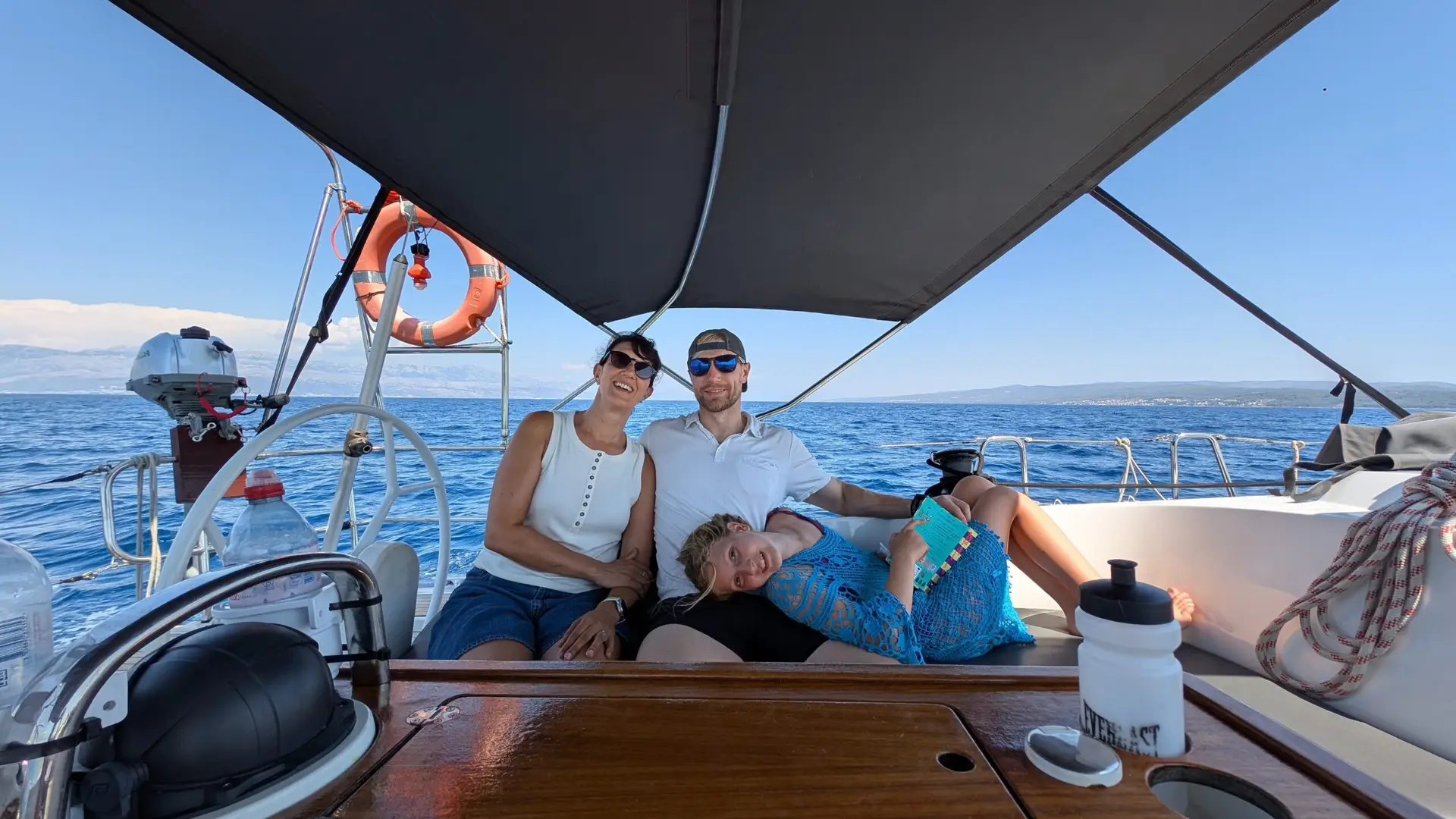
For many families, a catamaran is a comfortable choice because it provides wider deck areas, separate cabins, and more places to sit apart. Teenagers can read in the shade, listen to music with headphones, message friends, or simply watch the coastline pass by without being involved in every conversation.
On a monohull sailing boat, the experience is more compact but can feel more adventurous. The cockpit becomes the main social area, while the bow is often a favourite quiet spot for sunbathing or watching dolphins. Agreeing on simple family rules at the start of the trip helps: everyone should spend time together, but nobody needs to participate in every activity.
Let the holiday feel different from home
Teenagers do not need a packed schedule, but they do need variety. A day that includes sailing, swimming, exploring, and a relaxed evening ashore rarely feels repetitive.
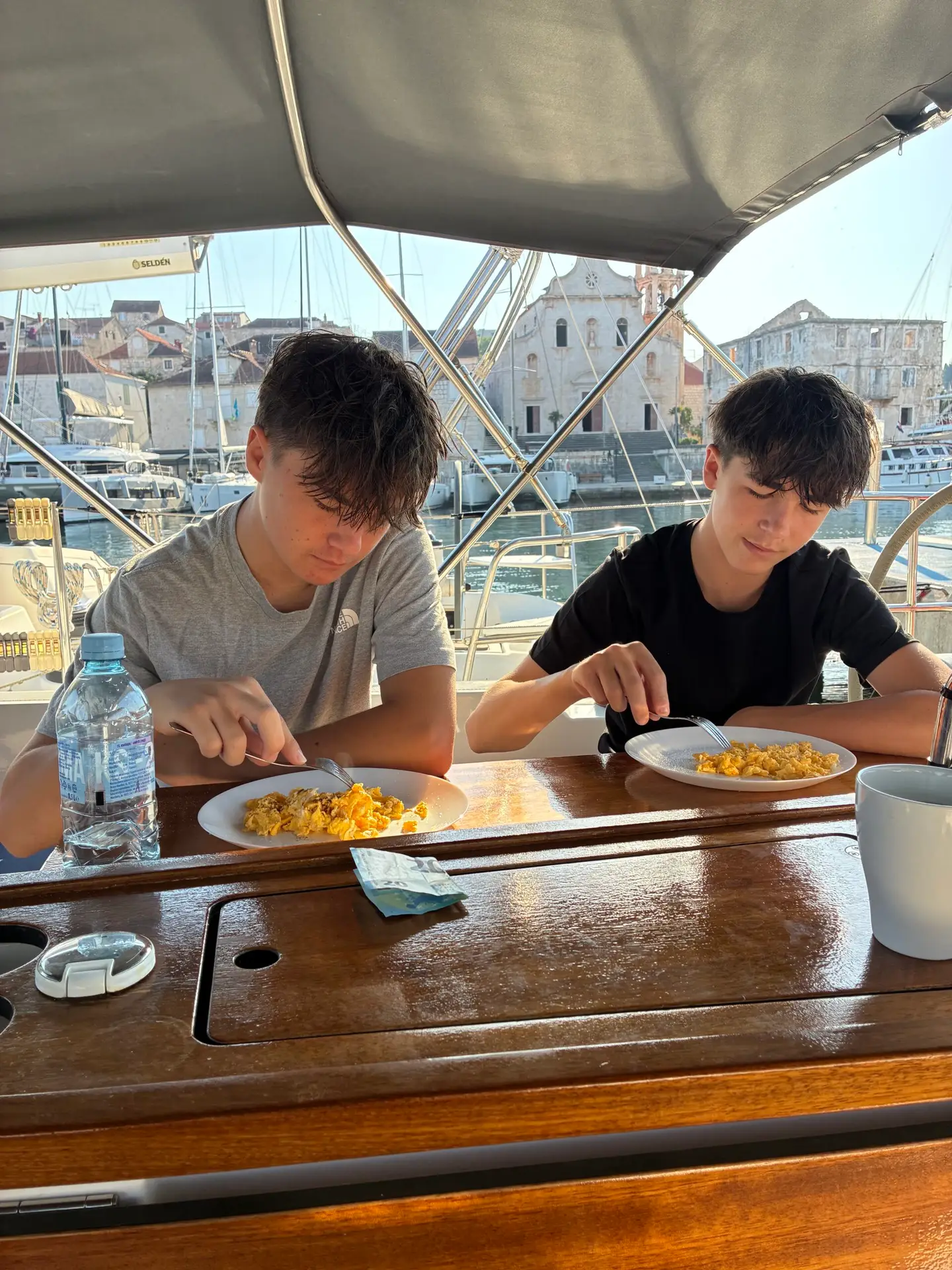
In our experience, the best family sailing holidays mix active moments with plenty of unstructured time. A typical day may begin with breakfast in a quiet bay, followed by a short sail to another island. Using a comfortable pace of around 7 knots makes it easy to plan realistic distances without turning the trip into a race.
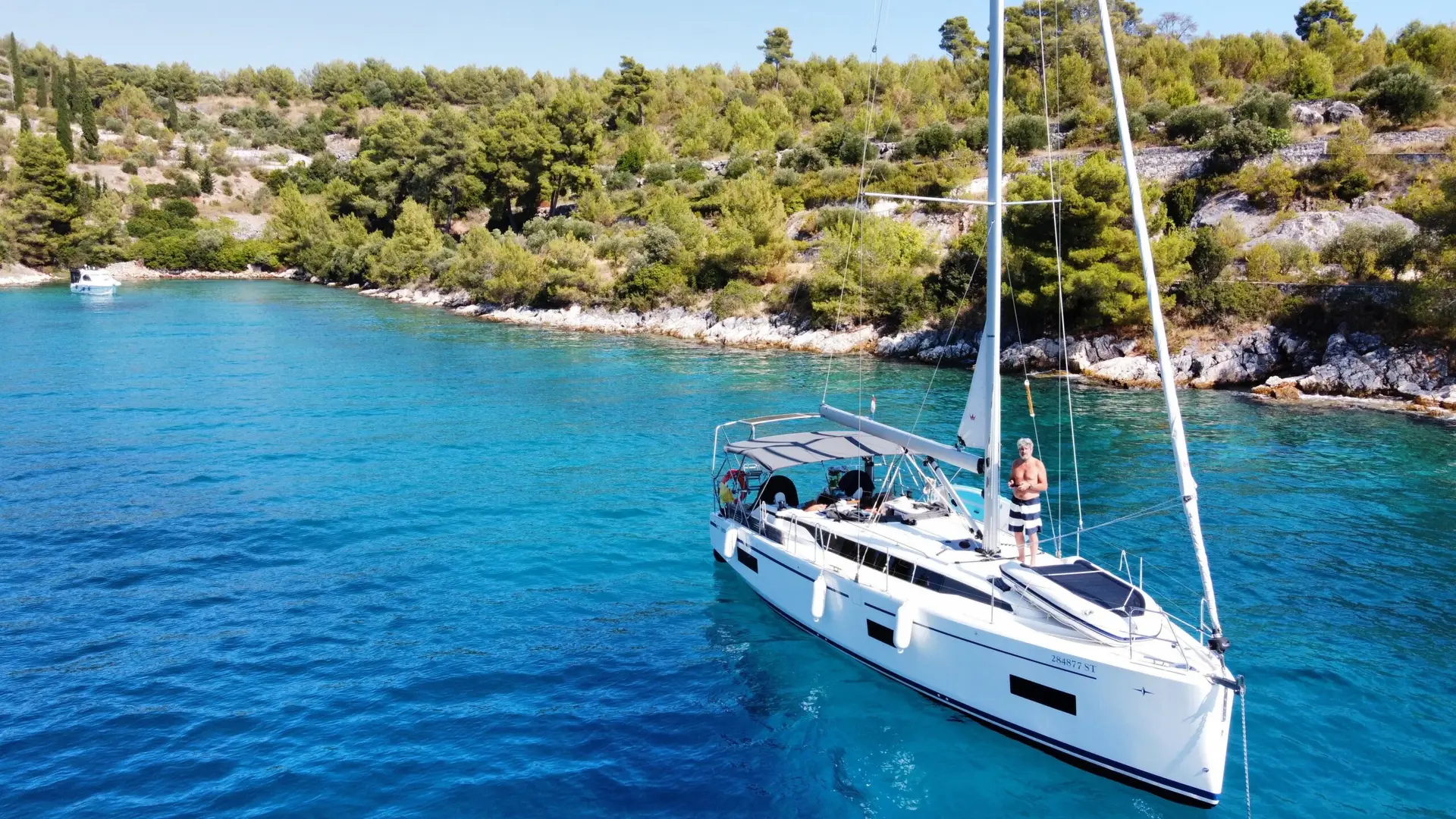
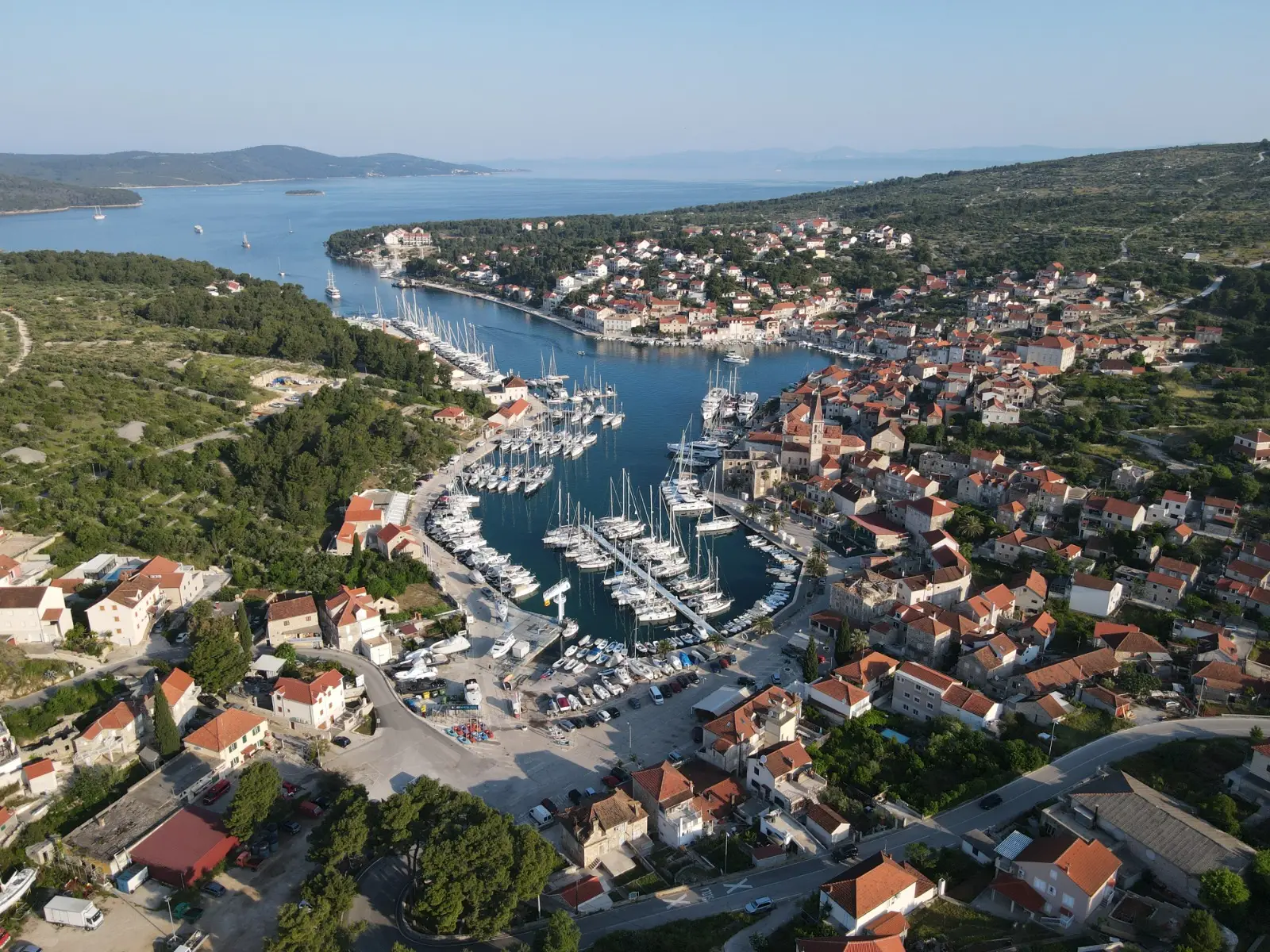
Instead of trying to visit as many islands as possible, slow sailing gives teenagers time to enjoy each place. Around Brač, for example, a family can spend an entire week discovering different sides of one island: lively waterfronts, sheltered beaches, clear-water bays, small villages, and hiking viewpoints. An off-the-beaten-track Brač itinerary shows how much there is to do without changing destination every day.
Build water activities into the plan
For most teenagers, the sea is the main attraction. Swimming from the boat feels more exciting than visiting an ordinary beach, particularly when the anchorage is calm and the water is clear.
Bring or hire equipment that creates easy entertainment throughout the day:
- Snorkelling masks and fins for exploring rocky coves
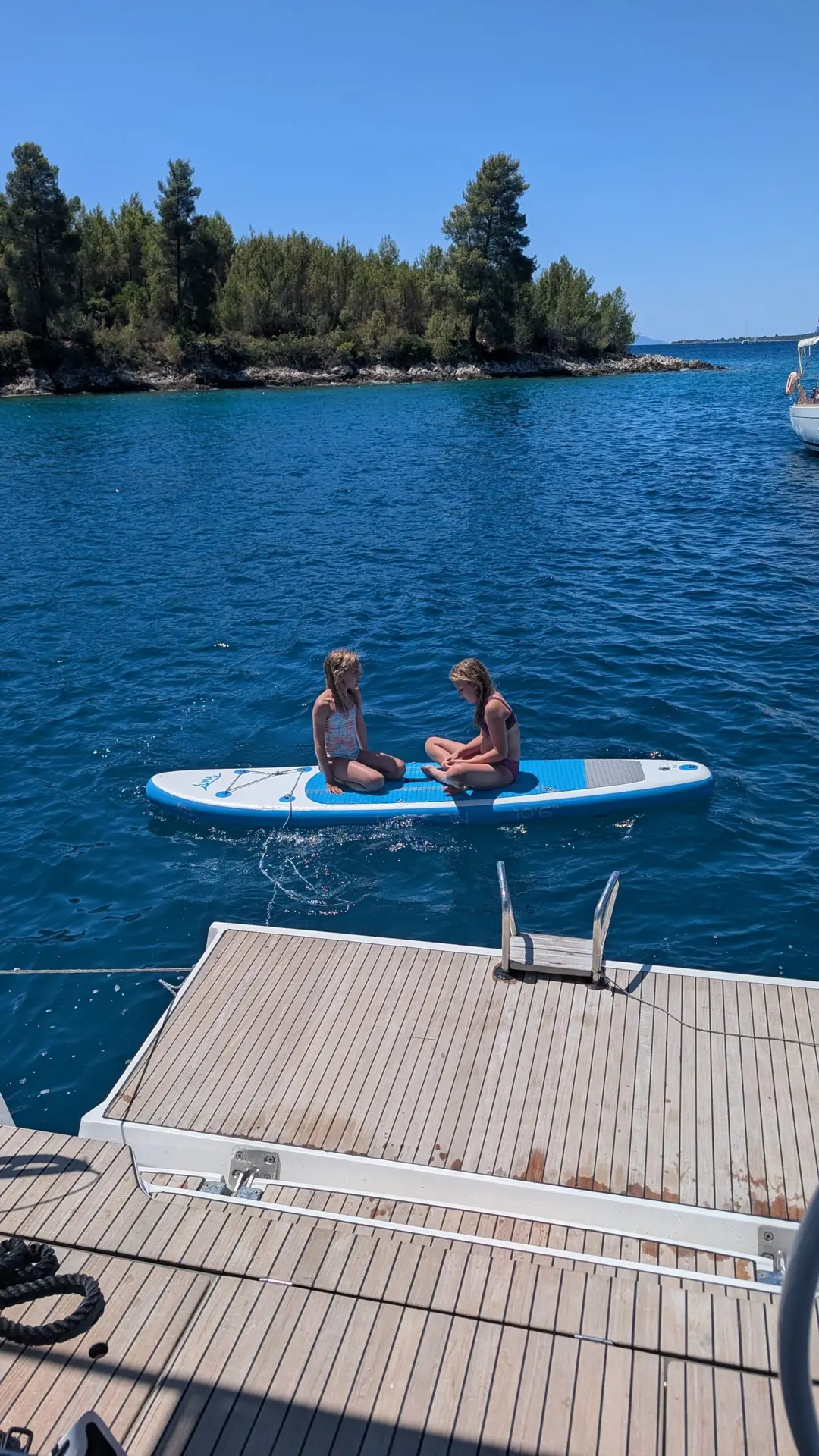
- A stand-up paddleboard for short challenges and races
- An inflatable kayak for reaching nearby beaches
- Fishing gear for a simple late-afternoon activity
- A floating mat or inflatable tube for relaxing in the water
A paddleboard can be especially useful on a family trip because it gives a teenager a small sense of independence while remaining close to the boat. Snorkelling also turns every new anchorage into a different experience, from observing fish around the rocks to finding a quiet swimming spot away from the busiest beach areas.
Include friends, music, and phone-friendly moments
A teenager may value time with friends as much as family time. If possible, inviting one friend can transform the entire holiday dynamic. Two teenagers often entertain each other naturally, whether they are swimming, taking photos, choosing music, or walking around a harbour in the evening.
Phones do not have to be the enemy of a sailing holiday. They are useful for playlists, photos, navigation apps, sharing travel memories, and staying in touch with friends at home. Rather than imposing strict limits, it is often better to agree on practical phone rules: devices stay away during meals, are charged safely, and are not used while someone is responsible for a sailing task.
Island sunsets, jumping from the stern, colourful waterfronts, and hidden coves all create the kind of moments teenagers genuinely want to capture. A sailing holiday can feel more relevant when they are allowed to document it in their own way.
Give them a real role in the sailing adventure
Teenagers are more engaged when they are not treated as passengers. Even small responsibilities can make the trip feel like a shared adventure rather than a parent-organised holiday.
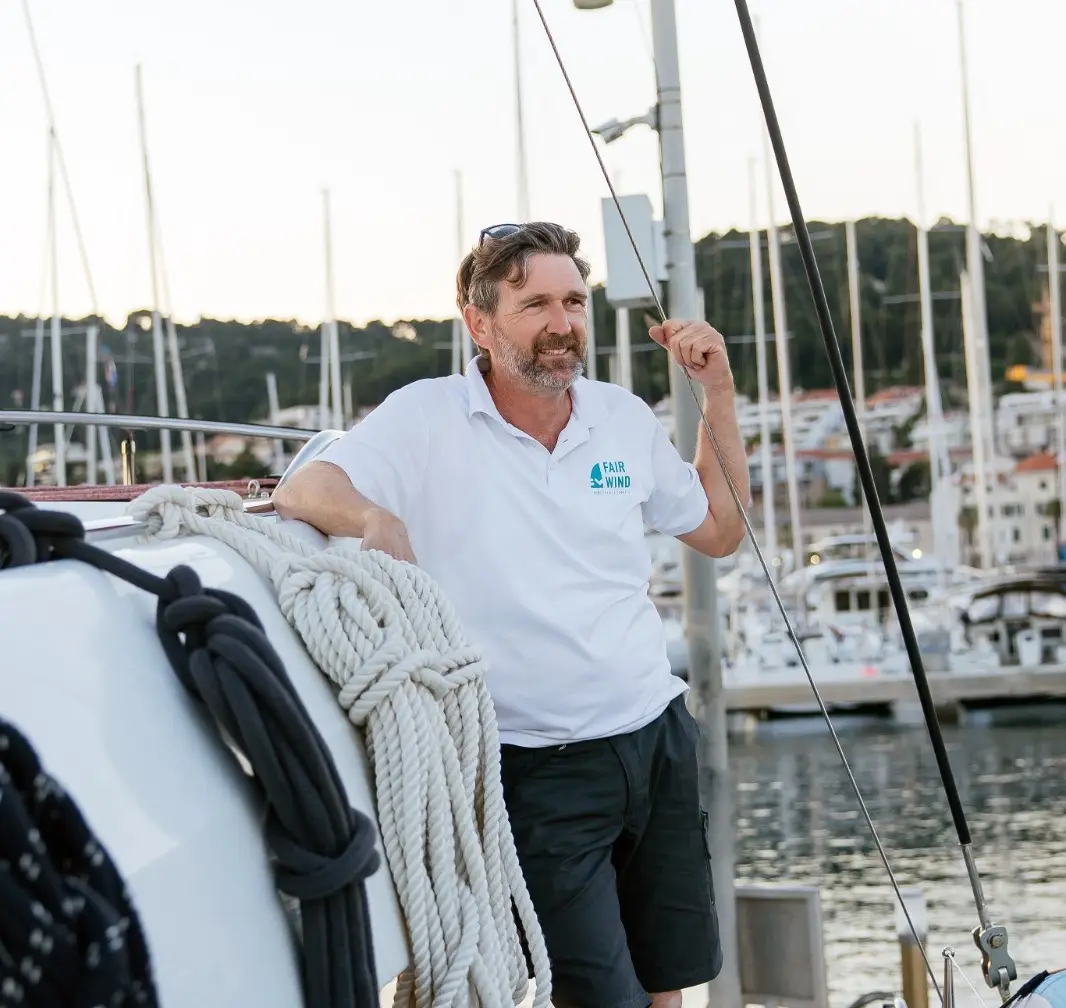
If you ask our skippers, many will say that teenagers quickly become interested once they are invited to take the helm, help raise a sail, check the route, or learn how to tie a line. These tasks should remain simple and safe, but they give a young person a sense of achievement.
They can also help choose the next stop, find a restaurant, pick a swimming bay, or plan an evening activity. Giving them choices makes a major difference. A teenager who selects the beach, the music, or the dinner location is far more likely to enjoy the day.
Leave room for relaxed evenings ashore
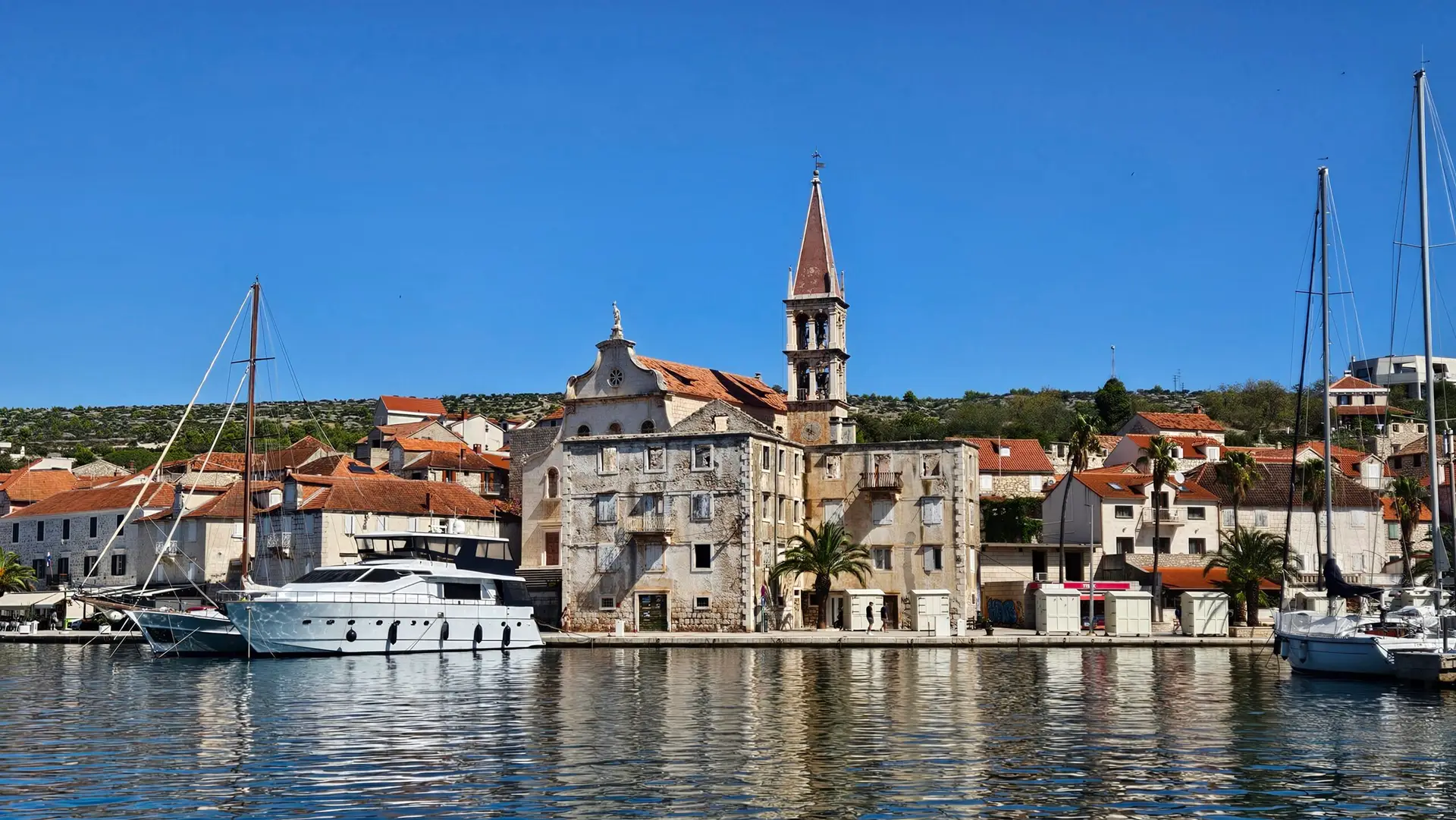
Evenings are often when teenagers reconnect with the family holiday. After a day at sea, a walk through a small Dalmatian town, an ice cream by the waterfront, or dinner in a casual local restaurant offers a change of scenery.
Not every evening needs to be busy. Some families prefer a quiet meal on board, card games in the cockpit, or watching a film under the stars. Others enjoy finding a lively promenade where teenagers can browse small shops and feel part of the summer atmosphere.
The best week on board usually includes both: peaceful nights in a secluded bay and a few evenings in places where there is music, movement, and people around.